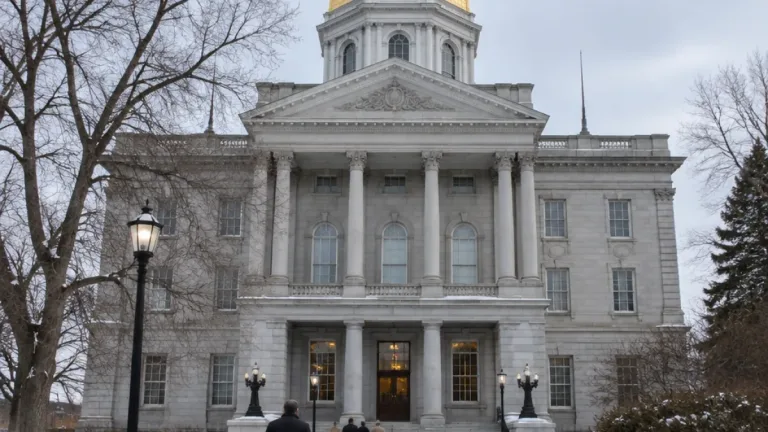
The New Hampshire Supreme Court heard arguments Tuesday in the appeal of Timothy Verrill, who is serving a sentence of 90 years to life after being convicted in the 2017 killings of Christine Sullivan and Jenna Pellegrini.
Verrill’s attorneys are asking the state’s highest court to overturn the murder convictions entered in 2024. The appeal is at the argument stage, and the justices did not issue a decision during Tuesday’s hearing.
Defense attorney Stephanie Hausman argued that the evidence presented at trial was insufficient to establish Verrill’s guilt beyond a reasonable doubt. She said the case did not include a video confession or DNA from Verrill on the victims. The defense also challenged testimony from a witness at the first trial.
Hausman said the witness testified before the first trial ended in a mistrial. The witness died before the second trial, preventing the defense from cross-examining the person before the testimony was used again, according to the arguments described in court.
The defense arguments
- Hausman argued that the evidence did not exclude reasonable conclusions consistent with Verrill’s innocence.
- The defense said prosecutors had not presented a video confession or DNA from Verrill on the victims.
- The defense argued that testimony from a witness in the first trial should not have been admitted at the second trial because the witness could not be cross-examined beforehand.
Hausman said the defense did not have to identify who committed the killings to prevail on appeal. The legal question, she argued, was whether the evidence was sufficient to support the convictions.
Hausman said.
Senior Assistant Attorney General Peter Hinckley defended the convictions for the state. He argued that the evidence should be considered as a whole rather than separated into individual pieces. Prosecutors had presented evidence about Verrill’s mental health and drug use at the time, as well as his belief that the women were informants working for the state.
Hinckley said.
Prosecutors also pointed to security-camera footage showing Verrill at the house on the night of the killings before the camera stopped recording for several hours. They argued that he was the only other person seen at the home with Sullivan and Pellegrini. The state also cited DNA found on garbage bags at the house.
Verrill has been in prison since 2024. The Supreme Court’s review will determine whether the convictions and sentence remain in place, based on the legal challenges raised in the appeal.