
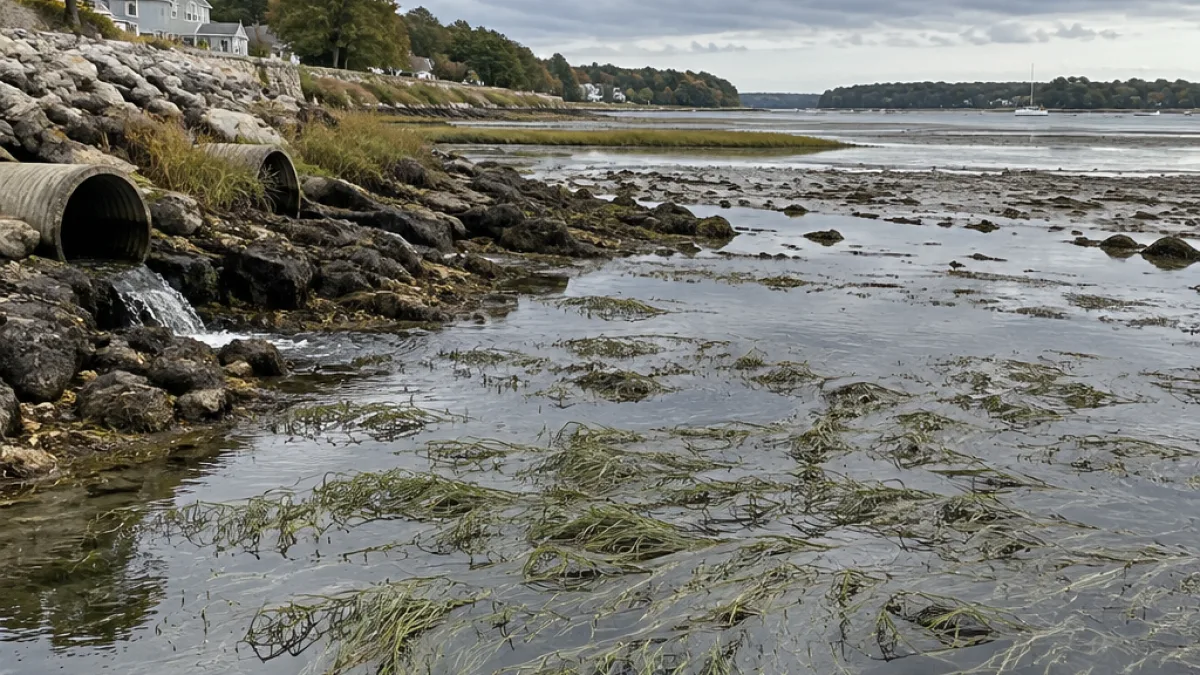
The Conservation Law Foundation plans to sue the U.S. Environmental Protection Agency and two of its top officials over pollution in New Hampshire’s Great Bay Estuary, arguing that federal regulators have failed to prevent further damage to the nationally significant water body.
The environmental group announced the planned legal action Thursday. Senior Attorney Heidi Trimarco said the organization’s notice is based on evidence that the estuary’s condition has deteriorated over decades and that state and federal agencies have known about the problem.
“The state and federal agencies are well aware of this problem, and it’s way past time for EPA to step up,” said Heidi Trimarco, senior attorney for the Conservation Law Foundation.
The EPA did not respond Thursday to a request for comment from the New Hampshire Bulletin, which originally produced the report. The planned lawsuit focuses on nitrogen pollution entering the estuary through stormwater runoff, according to the foundation’s notice.
Declining eelgrass coverage
Great Bay is a tidal estuary east of Newmarket, about 8 miles inland from the Atlantic coast. Several rivers meet there before flowing toward the Gulf of Maine. Its water is brackish, meaning it contains a mixture of fresh and salt water, and its marshes provide habitat for wildlife and commercially important fisheries, including clams and oysters.
The EPA has designated Great Bay as one of 28 estuaries in the United States considered nationally significant. The ecosystem has shown signs of decline for years, with the condition of eelgrass serving as one of the most visible indicators.
A University of New Hampshire research report published earlier this year found that eelgrass coverage in Great Bay had fallen about 80% since 2024. The researchers linked the decline to the broader health of the estuary. Eelgrass is an aquatic plant that supports coastal ecosystems and provides habitat for marine life.
Nitrogen sources
Excess nutrients can put stress on eelgrass and other parts of an estuary’s ecosystem. Nitrogen can enter waterways through several pathways, including fertilizers, wastewater and stormwater flowing across developed land before reaching rivers and tidal waters.
Stormwater runoff is identified as the largest source of nitrogen pollution entering Great Bay and is the central concern in the Conservation Law Foundation’s planned legal action. The organization said the pollution threatens to push the estuary toward further ecological decline.
- Great Bay lies east of Newmarket at the confluence of several rivers and the Gulf of Maine.
- University of New Hampshire researchers reported an approximately 80% reduction in eelgrass coverage since 2024.
- The planned case concerns nitrogen pollution carried into the estuary by stormwater runoff.
The estuary’s surrounding marshes and brackish waters support wildlife as well as fisheries that include clams and oysters. The Conservation Law Foundation’s planned lawsuit would place the group’s concerns about nitrogen pollution and federal oversight before the EPA and the two officials named in its notice.