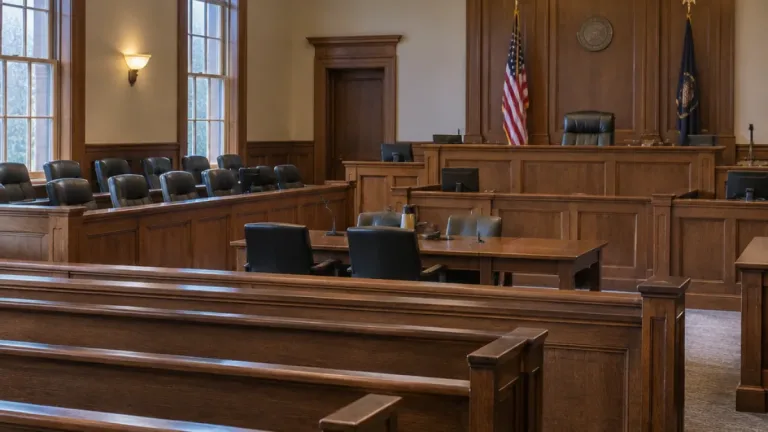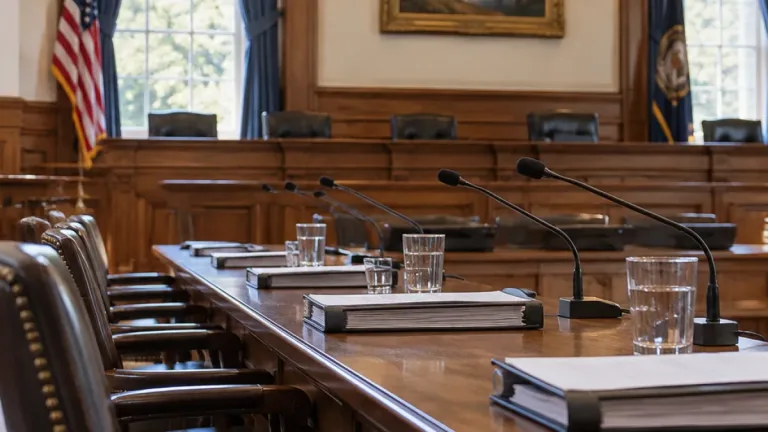
New Hampshire defended its absentee-ballot identification rules Monday as an appeal by three visually impaired voters reached a hearing before the state Supreme Court. The voters argue that requirements adopted under Senate Bill 287 place an unconstitutional burden on disabled, elderly and low-income residents who cannot vote in person.
Mary Triick, a senior assistant attorney general with the New Hampshire Department of Justice, represented the offices of Secretary of State David Scanlan and Attorney General John Formella. She argued that the state constitution protects the right to vote but does not create a separate right to use absentee voting without conditions.
“Obviously, you have a fundamental right to vote. You do not have a fundamental right to vote absentee,”
Triick said.
The law at issue
Senate Bill 287 took effect last year and requires voters to complete an identity-verification step when seeking an absentee ballot. For each local, primary and general election, an applicant must either show valid photo identification in person when requesting the ballot or provide a notarized signature or a copy of identification with the application.
The plaintiffs say those requirements make absentee voting difficult or inaccessible for people with disabilities and others who face obstacles obtaining identification, appearing in person or completing notarization requirements. Their lawsuit names Scanlan and Formella as defendants in their official roles.
A trial court dismissed the case in December 2025. In that ruling, the court characterized the identification requirements as “ordinary burdens” and found that the state’s stated purposes — election security and preventing fraud — justified them. The voters then appealed to the state’s highest court.
Special panel hears appeal
The five justices who normally serve on the New Hampshire Supreme Court recused themselves from the case. Superior Court judges were appointed to hear the appeal instead, according to the hearing account. Monday’s proceeding addressed the legal challenge; the appellate court has not issued a decision.
The state relied in part on McDonald v. Board of Election Commissioners of Chicago, a 1969 decision by the U.S. Supreme Court. That ruling held that absentee voting is a privilege rather than a constitutional right and that states therefore have broad discretion in determining who may use it.
- Case stage: appeal after a trial-court dismissal in December 2025.
- Law challenged: Senate Bill 287, which requires additional identity verification for absentee-ballot applications.
- Hearing panel: Superior Court judges appointed after the state Supreme Court justices recused themselves.
The plaintiffs’ appeal asks the court to reject the trial court’s conclusion that the requirements are ordinary voting burdens. Their challenge is based on the New Hampshire Constitution’s requirement that absentee voting be available to voters who cannot vote in person. The hearing was the latest step in the lawsuit, and the legal question remains before the appointed panel.