New Hampshire hospitals and medical facilities are expanding diagnostic-imaging capacity as an older population increases demand for tests and the state faces shortages of radiologists and imaging technologists.
Facilities are using several approaches to manage the workload, including building or enlarging imaging units, relying on teleradiology for remote interpretation and bringing in temporary workers to help administer tests. Some are also experimenting with emerging artificial intelligence technologies, according to Business New Hampshire Magazine.
New Hampshire has the second-oldest population in the country, with nearly 22% of residents age 65 and older, according to the New Hampshire Commission on Aging. Population projections through 2050 show that people age 70 and older are expected to be the fastest-growing age groups.
“The longer people live, the more likely they’re going to be having some disease.”
— Rob Glew, executive director of Southern NH Radiology Consultants
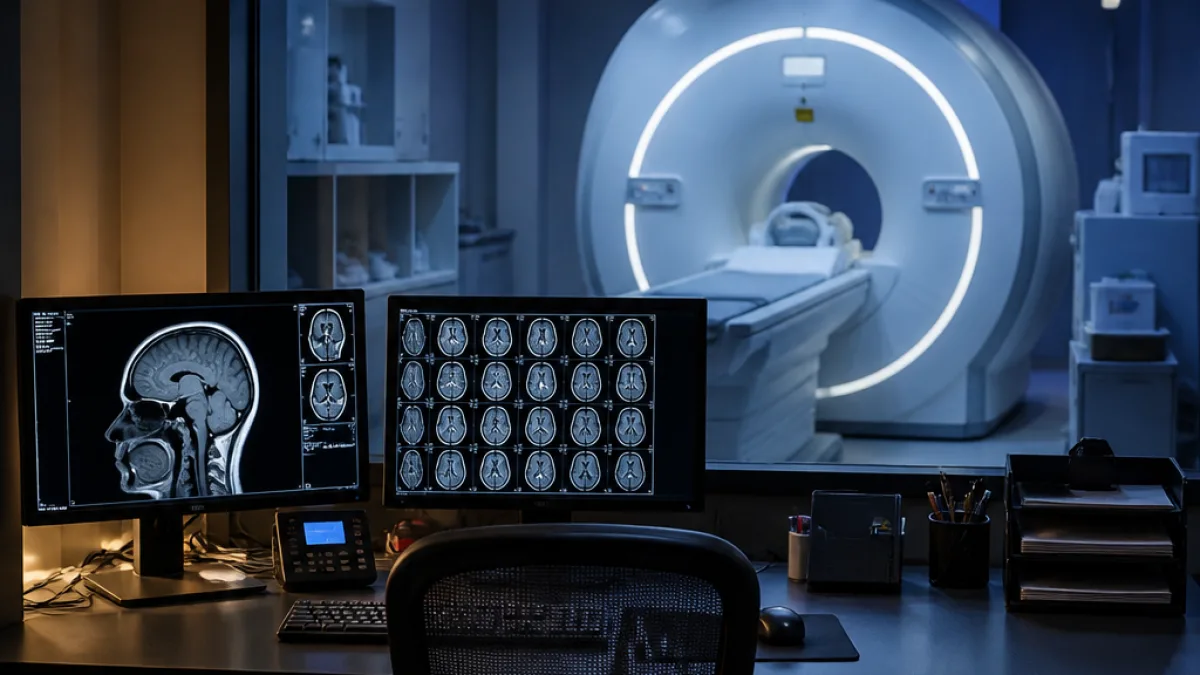
People age 65 and older account for about 30% of annual imaging nationally, according to the Radiological Society of North America. The increased demand includes MRI and positron emission tomography, or PET, imaging. PET scans show functions and metabolism, while MRI scans show structure and anatomy.
Facilities add capacity and outside support
Huggins Hospital is among the New Hampshire facilities responding to the demand. The hospital has a new MRI ambient experience suite. Other facilities are expanding diagnostic units or using remote radiologists to interpret scans.
Radiologists have become harder to recruit and retain in New Hampshire and across the country. The factors cited include retirements after the COVID-19 pandemic, limits in training capacity and burnout. Technologists who administer imaging tests are also in short supply.
- Teleradiology: Remote specialists interpret imaging studies for medical facilities.
- Temporary staffing: Facilities use temporary workers to help administer tests.
- Technology: Hospitals are expanding units and evaluating emerging AI tools.
Glew said the need for MRI services is also connected to population aging and advances in imaging. He said many conditions for which MRI can be useful occur more often among older people.
PET technology can use radioactive substances to view organs and tissues at a cellular level and may be combined with MRI and computed tomography scanners. Fortune Business Insights projects that the global PET technology market will grow from $2.96 billion in 2026 to $4.37 billion by 2034. The projection describes the global market, not New Hampshire spending.
National imaging use is increasing by about 3% to 4% annually, with aging populations identified as the primary driver. New Hampshire facilities are addressing that growth while trying to fill both radiologist and technologist positions.