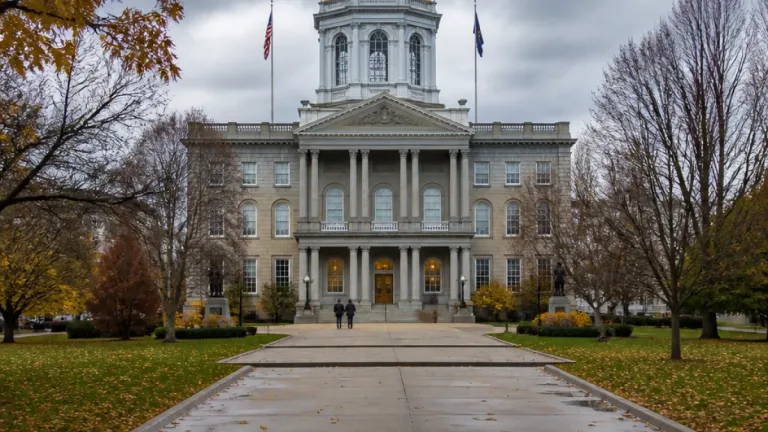
The New Hampshire Supreme Court has upheld the decision to revoke the charitable gaming license connected to Concord Casino, ending the latest appeal by Andy Sanborn and his company, Win Win Win LLC.
The ruling affirmed the New Hampshire Lottery and Gaming Commission’s action after Sanborn and the company argued that the commission had acted unlawfully during an effort to sell the casino to an out-of-state gambling operator whose identity was not disclosed in the court material summarized by officials.
Sanborn’s attorneys had asked the state’s highest court to review whether the commission had improperly interfered with the proposed transaction. They alleged that regulators had “sabotaged and eventually blocked” the sale. The Supreme Court rejected that challenge, finding no legal error by the commission.
What the court upheld
The case grew out of proceedings before the gaming commission. In 2023, a hearing officer suspended Sanborn’s license for six months and ordered that the business be sold. The action followed allegations that Sanborn had misused $844,000 in pandemic relief loans tied to his business.
The New Hampshire Attorney General’s Office said the Supreme Court determined that the proposed buyer did not satisfy the suitability standards required to participate in charitable gaming. Those standards apply to the people and entities seeking permission to operate charitable gaming businesses in the state.
- The Lottery and Gaming Commission’s license-revocation decision remains in effect.
- The Supreme Court found no error in the commission’s handling of the proposed sale.
- Sanborn and Win Win Win LLC were the parties challenging the commission’s action.
The commission’s decision also came amid a separate federal criminal case involving Sanborn. In July 2026, he pleaded guilty in federal court to misusing $250,000 in COVID-19 relief funds intended to support his business. The funds were used for personal expenses, according to the Attorney General’s Office.
“Charitable gaming must be conducted with integrity, transparency, and accountability.” — Attorney General John Formella
Formella said the Department of Justice works with the Lottery and Gaming Commission to enforce the legal standards governing charitable gaming operators. He said the department welcomed the Supreme Court’s decision affirming the commission’s actions.
The Supreme Court ruling resolves the appeal over whether the commission could reject the proposed transaction and revoke the license. The federal criminal case involving Sanborn is a separate proceeding from the state administrative licensing dispute.