
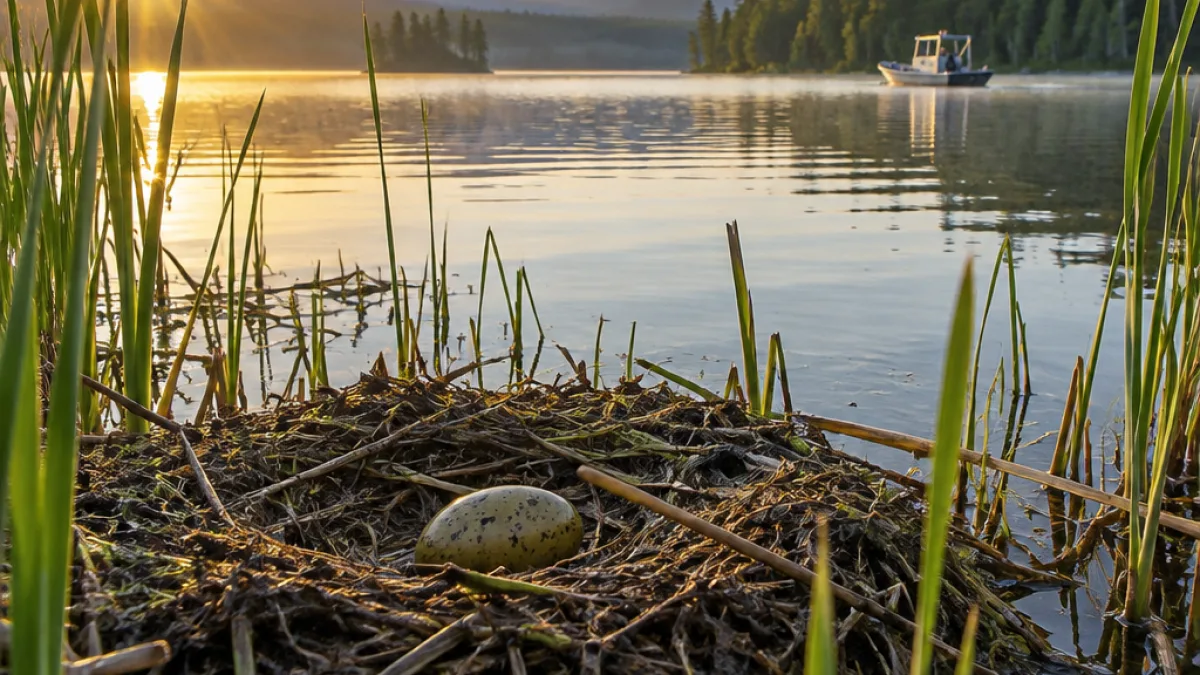
A study of loon eggs from across New Hampshire found widespread contamination, with samples from Squam Lake showing high levels of certain pollutants along with thinner, relatively weak shells and smaller overall size.
The findings were published in a peer-reviewed journal in 2026 by biologists affiliated with the Loon Preservation Committee. Researchers are examining the results as they assess another difficult breeding season for loons, a species that depends on clean lakes and abundant freshwater fish.
Findings from Squam Lake
The study found contaminants in eggs collected throughout the state. The results from Squam Lake drew particular concern because the eggs combined elevated contaminant levels with physical characteristics that can signal stress for the species, including reduced size and shells that were thinner and less strong.
Biologists said the results show that pollution remains one of the challenges facing loons in New Hampshire. Micah Miller, director of the loon and Arctic programs and co-director for the Center for Ecotoxicology at the Biodiversity Research Institute in Maine, was not involved in the study. Miller said the presence of contaminants carries implications beyond wildlife.
“Across the board, we know that the environmental and human health risks of having contaminants in the environment, that alone is enough reason to try to reduce exposure,” Miller said.
The loon population also faces threats connected to activity on the state's lakes. The birds share their habitat with anglers, boaters and other summer visitors, creating opportunities for disturbances around nesting sites and collisions on the water.
- Lead fishing tackle remains the most immediate threat to loon populations, according to a Loon Preservation Committee biologist identified as Grade.
- Boat wakes can wash over nesting areas and disturb eggs or young birds.
- People approaching nesting sites too closely can cause breeding loons to leave, while boat-loon collisions can be fatal.
Grade said the previous season was relatively successful. The cold, rainy start to the most recent summer may have reduced boat traffic during the early part of the breeding season, when disturbance can affect nesting loons, Grade said.
The contamination findings add to the committee's continuing evaluation of loon health across New Hampshire. The eggs examined in the study came from multiple locations, while the Squam Lake results provided a particularly notable example of the environmental pressures affecting the state's loon population.