New Hampshire’s nuclear policy remains open as regional electricity demand is projected to grow, with Seabrook Station continuing to provide a substantial share of New England’s power and a proposed state nuclear campus left out of the next stage of a federal selection process.
New Hampshire is the only New England state without a restriction or moratorium on building new nuclear generation, according to the Wisevoter analysis. The state’s position comes as ISO New England forecasts a 9% increase in electricity demand over the next decade across the region.
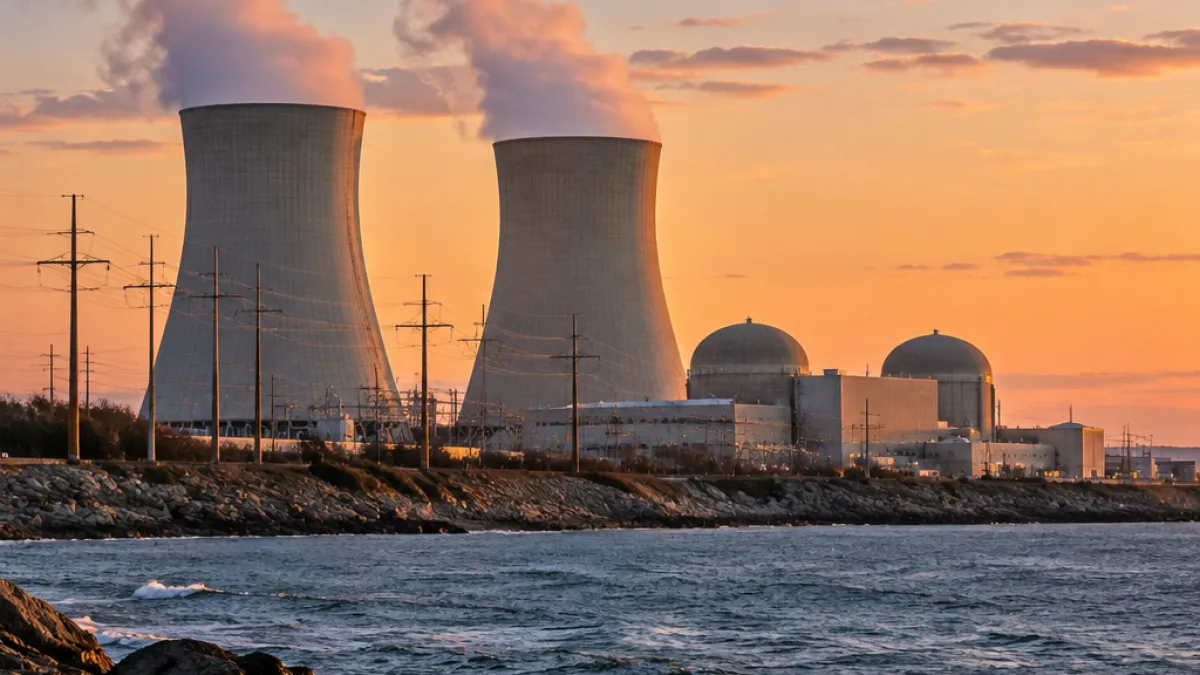
Seabrook remains the state’s central nuclear facility
Seabrook Station began operating in 1990 and has a U.S. Nuclear Regulatory Commission operating license that runs through 2050. The plant produces about 1,250 megawatts, or roughly 8% of New England’s regional power.
NextEra Energy operates Seabrook Station. The company reached a $45 million tax agreement with the town of Seabrook covering fiscal years 2024 through 2026.
- Seabrook Station came online in 1990.
- Its NRC license is scheduled to remain valid through 2050.
- The facility supplies approximately 1,250 megawatts, or 8% of regional electricity.
The regional demand forecast has renewed attention on the role of nuclear power, including whether additional capacity could be developed in New Hampshire. No decision has been made to add new nuclear generation to meet the projected increase in demand.
State campus proposal did not advance
New Hampshire submitted an application to the U.S. Department of Energy to host a Nuclear Lifecycle Innovation Campus. The proposed campus would have included nuclear research, long-term storage for spent fuel, and advanced-reactor manufacturing and deployment.
The application did not advance through the federal selection process. Its outcome leaves the state’s proposed role in nuclear research and advanced-reactor development unsettled.
Separately, StarCube, a nuclear startup headquartered in Portsmouth, plans to build a microreactor test facility in New Hampshire within four years. The company is backed exclusively by venture capital funding, according to the analysis.
The state’s nuclear landscape therefore includes an operating commercial reactor, a federal proposal that did not move forward and a private plan for a test facility. Seabrook’s current license provides an established operating horizon, while the proposed campus and StarCube project represent separate efforts involving research, storage, testing and advanced-reactor manufacturing.
Regional precedent
The closure of New York’s Indian Point nuclear plant in 2021 is part of the regional debate. After that closure, natural gas expanded to meet energy needs rather than renewable generation, according to the analysis. That outcome is cited as a precedent in discussions about how New England could respond to rising electricity demand.
For New Hampshire, the combination of ISO New England’s demand projection, Seabrook’s role in the regional grid and the state’s lack of a new-nuclear moratorium leaves future nuclear development subject to additional decisions by state officials, federal agencies, utilities and project developers.