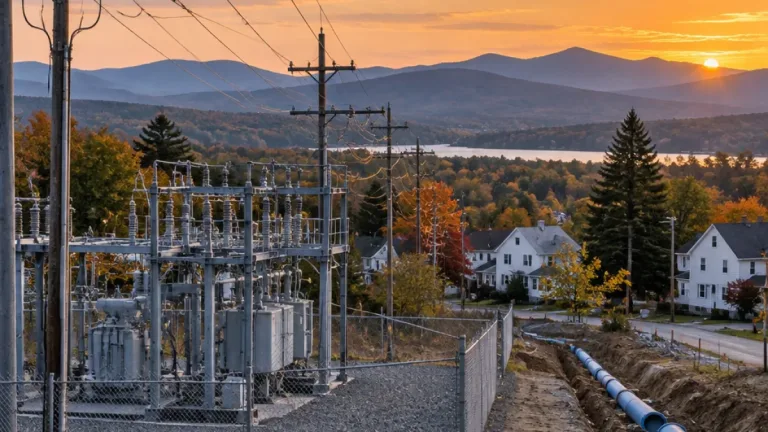

A New Hampshire environmental agency returned to the region Monday to review the continuing effects of PFAS contamination discovered at a Merrimack manufacturing plant and later found in nearby communities.
The New Hampshire Department of Environmental Services held the public meeting in Merrimack on Nov. 16, 2026, bringing a toxicologist to address questions about health concerns associated with PFAS, a group of chemicals often called “forever chemicals.” The meeting also covered cleanup work already underway and additional remediation efforts.
PFAS were detected in tap water inside the Saint-Gobain Performance Plastics plant in Merrimack in 2016. The chemicals were subsequently found in surrounding communities, including Merrimack, Bedford, Litchfield, Londonderry and Hudson. The contamination has continued to affect residents who rely on private wells or other water sources.
Residents describe continuing concerns
Hillsborough District 12 state Rep. Rosemarie Rung said the meeting gave residents an opportunity to review the history of the contamination and learn about efforts to provide safe drinking water. She also said the gathering could help people who have moved to Merrimack understand the issue and the steps taken since PFAS was found.
“Eleven years have passed, and this is a time for them to update the community. Those people that have moved into Merrimack to educate them about the history, but also to give them a summary of what's been done to date to help provide safe drinking water.”
— State Rep. Rosemarie Rung
Kathryn Segreti, whose home is just outside the boundaries established for Saint-Gobain’s responsibility, said she avoids using her household water for cooking or drinking. She said she drives to Monadnock in Wilton each week to obtain water.
“I don't use it. If I'm going to be doing pasta, I don't use it. If I'm boiling potatoes, I don't drink it. I drive to Monadnock in Wilton to get my water. It's a weekly thing now.”
— Kathryn Segreti
Cleanup boundaries and water infrastructure
One part of the response is a consent decree that established boundaries where Saint-Gobain is responsible for addressing contamination through several measures. Rung said she believed the company’s obligations should have reached more communities and included broader requirements to pay for water purification.
In April, Saint-Gobain agreed to provide $1.7 million for a new water main in Londonderry. The project was described as one component of broader remediation efforts tied to the contamination.
“I think they're going as best as they can under the circumstances. I wish I could turn the clock back to when the consent decree was finalized in 2018 and expand the boundaries, put a lot more requirements on Saint-Gobain to pay for purification.”
— State Rep. Rosemarie Rung
- 2016: PFAS was found in tap water at the Saint-Gobain plant in Merrimack and later in nearby communities.
- 2018: The consent decree establishing the cleanup boundaries was finalized.
- April 2026: Saint-Gobain agreed to fund $1.7 million toward a new Londonderry water main.
The meeting placed the contamination’s health questions, affected neighborhoods and remediation obligations in the same public discussion. Residents in the five Southern New Hampshire communities identified at the meeting remain connected to the cleanup boundaries and the availability of safe drinking water.