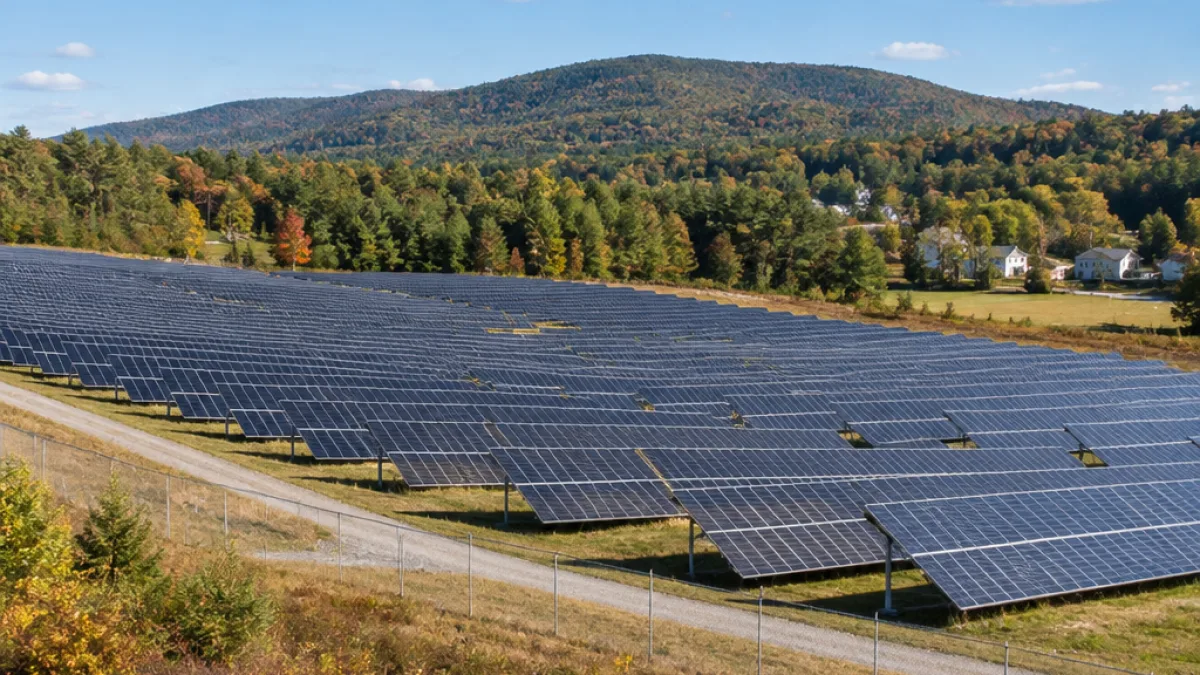
A solar array completed on a capped landfill in Jaffrey is expected to reduce electricity supply charges by 25% for about 250 households, according to information provided about the project.
The 1.34-megawatt installation includes 2,266 panels and was developed through New Hampshire’s Low-Moderate Income Community Solar Program. The state Department of Energy established the program in 2022 to make shared solar available to households that may not be able to install panels on their own properties.
Local enrollment came first
Jaffrey residents received first priority to enroll in the project. Residents of neighboring communities were next in line, with remaining participants selected at random, according to the project information.
The participating households are expected to receive about $2 million in bill credits over the array’s projected operating life of more than 40 years. The credits apply to electricity supply charges, which cover the energy purchased by a customer rather than the separate delivery charges associated with the electric grid.
- The array is expected to generate more than 1.7 million kilowatt-hours of renewable electricity each year.
- Annual carbon emissions are expected to fall by about 933 tons.
- The project uses a capped landfill that had been considered for solar development for nearly 20 years.
Town-owned site
ReVision Energy built the array and leases the town-owned landfill site. Blue Haven Solar provided financing for the public-private project. Town Manager Jon Frederick credited municipal staff and elected officials with helping bring the installation to completion, citing “persistence and a commitment to a vision,” according to the Ledger-Transcript.
The project was marked by a ribbon-cutting ceremony on Nov. 5. Its development followed years of consideration about how to use the capped landfill, a site with limited redevelopment options but enough area for a large solar installation.
Sam Evans-Brown, who leads Clean Energy New Hampshire and helped develop legislation establishing the community solar program, said the program connects energy affordability with the expansion of renewable power. The Jaffrey project’s enrollment structure and bill credits are tied to the state program’s focus on serving low- and moderate-income households.