Five Lakes Region communities are participating in a food-waste composting pilot supported by an $87,300 grant from the U.S. Department of Agriculture, as regional planners collect data on how much material households can keep out of landfills.
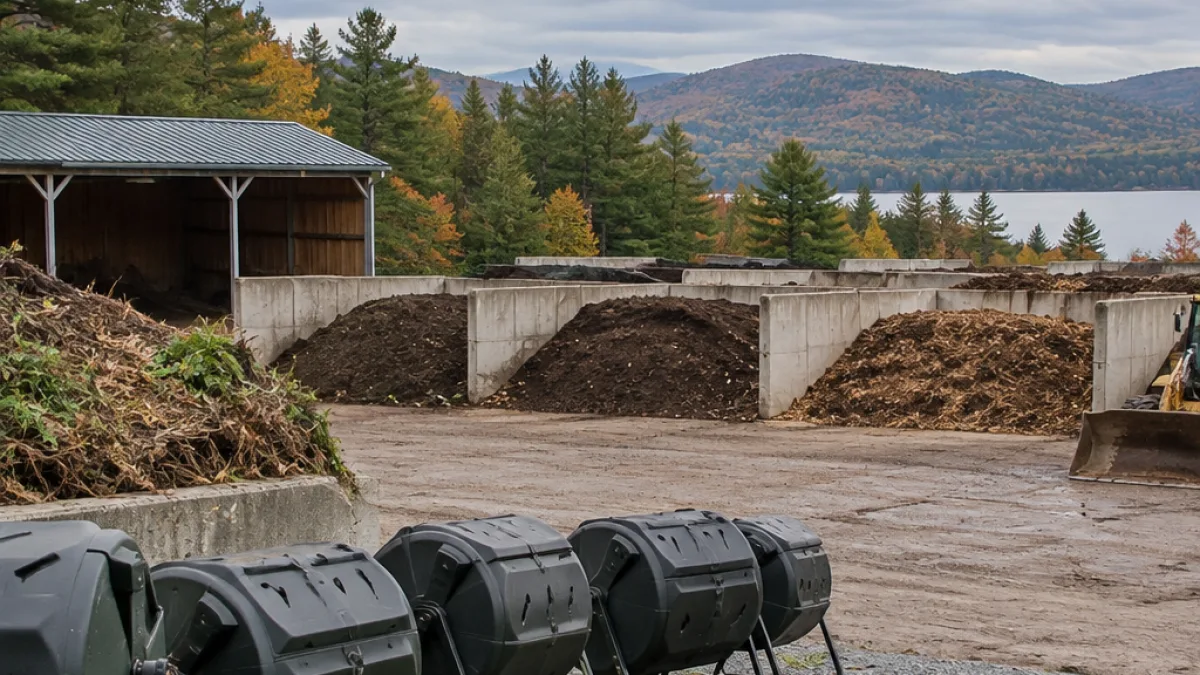
The Lakes Region Planning Commission received the Composting and Food Waste Reduction grant last year to establish the region’s first food-waste composting pilot program. The project includes large-scale composting sites at transfer stations in Gilford and Wolfeboro, along with home composting equipment and training.
Residents in Ashland, Bristol, Gilford, Moultonborough and Wolfeboro are taking part. The commission has distributed all 160 of the compost tumblers provided through the program. The units retail for more than $400, according to the commission.
Tracking the waste diverted
The project is designed to teach participating households how to compost while recording the amount of food waste diverted from disposal. The commission is receiving information about how the tumblers are being used and how much waste participants are processing. The data will also cover training delivered, landfill diversion and other results identified by the program.
- Two larger composting sites are being developed at town transfer stations in Gilford and Wolfeboro.
- Home composting tumblers went to 160 residents across five participating communities.
- Training is being provided to residents and solid-waste operators.
Volunteers working to restart a community garden in Ashland recently received instruction on using two Jora tumblers supplied through the grant. The garden is across the parking lot from Ashland Elementary School.
“It’s all about waste diversion at landfills. New Hampshire on the whole is probably on the lower end of waste diversion tactics.”
Matt Rose, an environmental planner with the Lakes Region Planning Commission, said composting offers a low-cost way to divert waste in the region and depends in part on education. The New Hampshire Department of Environmental Services is a project partner and helped with a training platform, Rose said.
The composting pilot is intended to give the commission and the USDA information about household food-waste practices and the effectiveness of local training. Solid-waste operators are included in the training as the participating towns develop both household and transfer-station approaches to composting.