Two New Hampshire housing bills are set for another chance in the upcoming legislative session after receiving unanimous support from the General Court’s Committee on Housing. House Bill 459 and Senate Bill 84 would limit the lot size that a town or city could require for a single-family home when the property has municipal water and sewer.
The bills would prohibit local requirements larger than half an acre in those areas. Both measures were sent to interim study over the summer, but they remain eligible for legislative action. A separate proposal that would allow newly built manufactured housing on any lot where a single-family home is permitted also is being considered again.
Lot sizes and housing supply
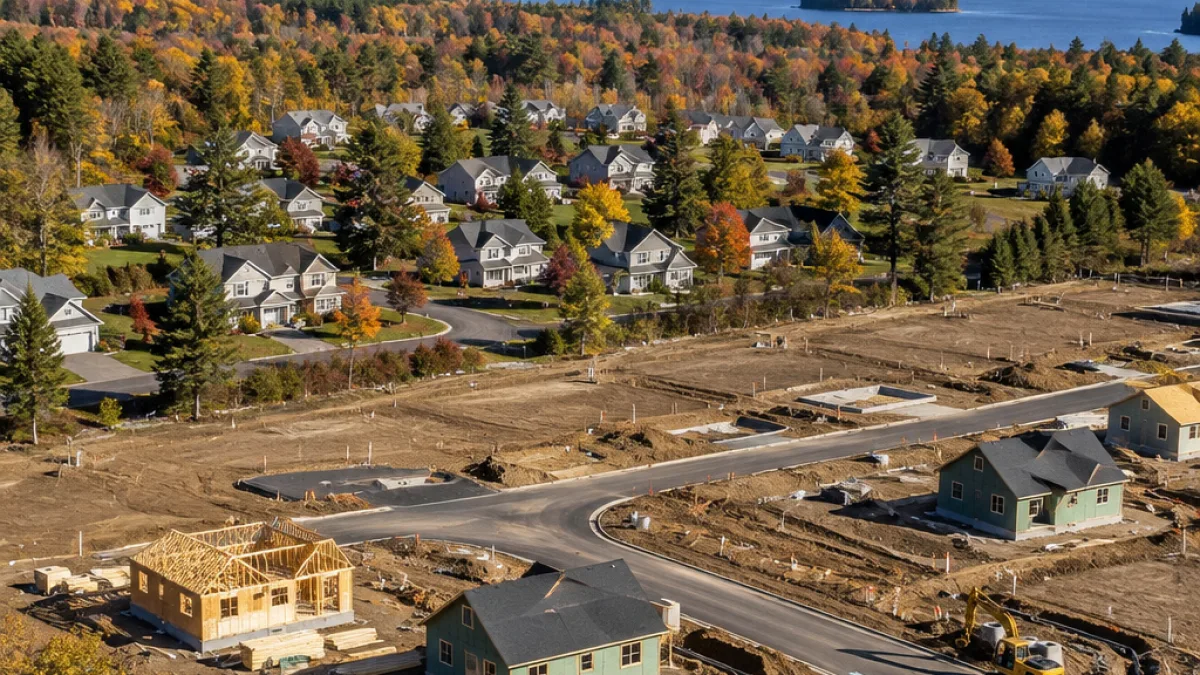
Minimum lot sizes of one acre are used for single-family homes in nearly 90% of New Hampshire’s towns and cities, according to the housing coverage. The requirement has been common across the state for decades. Housing advocates say requiring an acre for each home can increase construction costs and restrict the number of homes that can be built.
About 13% of New Hampshire’s buildable land allows single-family homes on lots smaller than one acre, according to the New Hampshire Zoning Atlas. When jurisdictions without zoning ordinances are excluded, that share falls to 7%.
- House Bill 459 and Senate Bill 84 address minimum lot sizes for homes with municipal water and sewer.
- The Committee on Housing unanimously recommended that the legislation advance.
- A proposal concerning manufactured housing on single-family lots also remains under consideration.
State housing targets
The renewed consideration of the bills comes as the state faces increased construction targets. A New Hampshire Housing study previously determined that the state needed 60,000 additional housing units by 2030 and 90,000 by 2040. At the time of that study, meeting the 2030 goal required about 5,174 units annually. With construction continuing at a slower pace, the annual requirement has risen to 8,133 units.
Support for allowing smaller starter-home lots also has increased in statewide polling. The St. Anselm Statewide Survey of Voter Attitudes on Affordable Housing found that 74% of respondents this year said every town should have an area where starter homes could be built on smaller lots. That figure was 59% a year earlier.
The proposals would affect local zoning authority by setting a statewide limit in areas with municipal water and sewer. Their next stage is legislative action during the upcoming session after the interim-study process and the Committee on Housing’s recommendation.