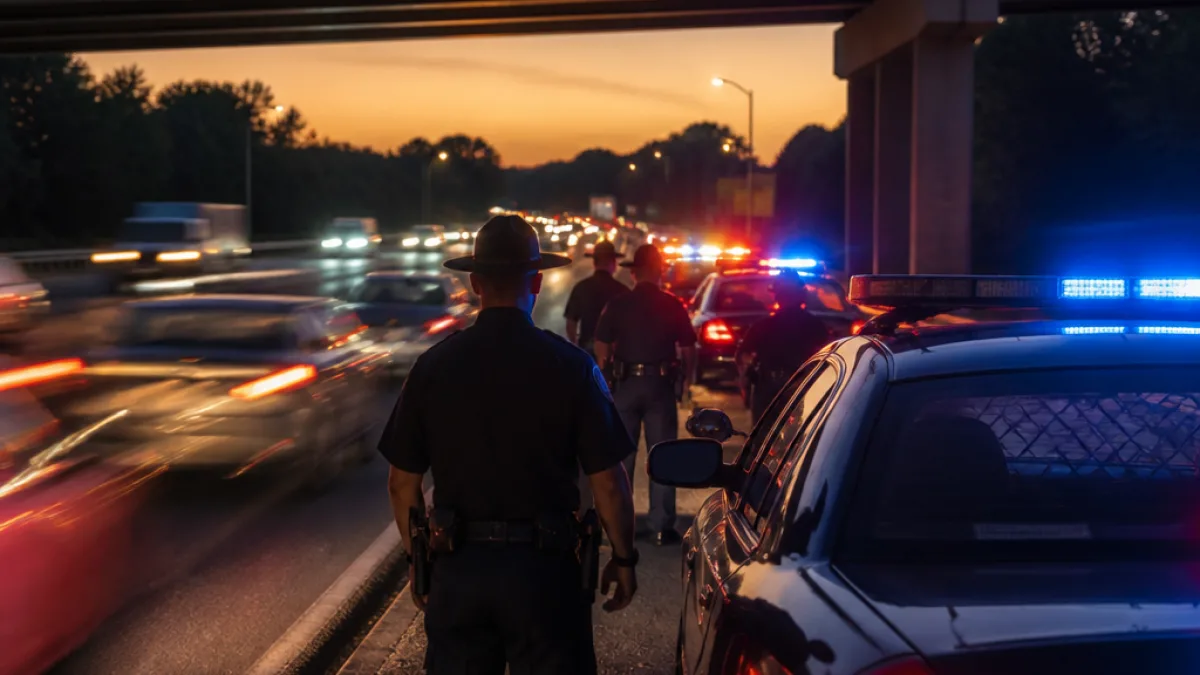
New Hampshire State Police participated in Operation Wicked Safe, a coordinated, multi‑state traffic enforcement effort that ran Oct. 13–15 and targeted impaired driving, distracted driving, excessive speed and other high‑risk behaviors on major highways across the region.
Who took part and where
Troopers from Massachusetts, Connecticut, New York, Rhode Island, Vermont and New Hampshire carried out highly visible patrols on priority roadways, including Interstates 90, 91, 84, 93, 95 and 395 and other designated routes. The operation was announced at the Weston Barracks by the Massachusetts State Police, which developed the campaign as part of its Division of Field Services’ traffic‑safety initiative.
Focus and rationale
The operation concentrated on enforcement of laws against aggressive driving, excessive speed, distracted driving and impaired driving. Authorities said the initiative reflected field reports and traffic data showing a rise in dangerous driving behaviors, particularly in October when seasonal factors such as increased tourism and changing school schedules can affect roadway safety.
“Dangerous driving does not stop at state lines, and neither does our commitment to keep people safe on our roadways,”
Massachusetts State Police Colonel Geoffrey Noble said in the announcement, adding that the operation brings together troopers and specialized units across the region in a coordinated effort.
Enforcement and public message
Officials said the goal was both enforcement and deterrence: highly visible patrols and specialized units were deployed to find and stop drivers engaging in high‑risk behaviors and to send a clear message that dangerous driving will be enforced.
- Dates: Oct. 13–15
- Participating agencies: State police or trooper units from Massachusetts, Connecticut, New York, Rhode Island, Vermont and New Hampshire
- Priority roadways: Interstates 90, 91, 84, 93, 95, 395 and other designated routes
Context and timing
State police agencies said the operation aligns with an internal Excellence Initiative goal to promote safer communities. Law enforcement leaders pointed to an observed seasonal increase in dangerous driving in October, when road and weather conditions change and travel patterns shift.
The coordinated patrols are part of broader efforts by regional public safety agencies to reduce crashes, injuries and fatalities associated with impaired and distracted driving. Department officials emphasized that enforcement will be conducted under existing traffic laws and that drivers observed committing offenses will be subject to usual stops, citations and arrests.
New Hampshire State Police did not provide a detailed post‑operation summary in the announcement distributed by Massachusetts, including counts of stops, arrests or citations in the state; those figures typically are released later by the participating agencies.